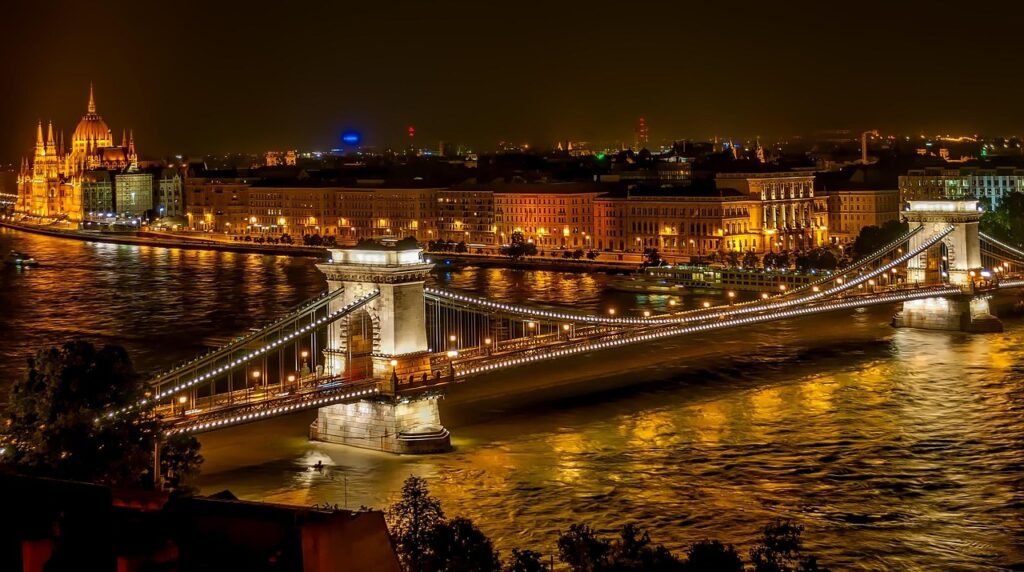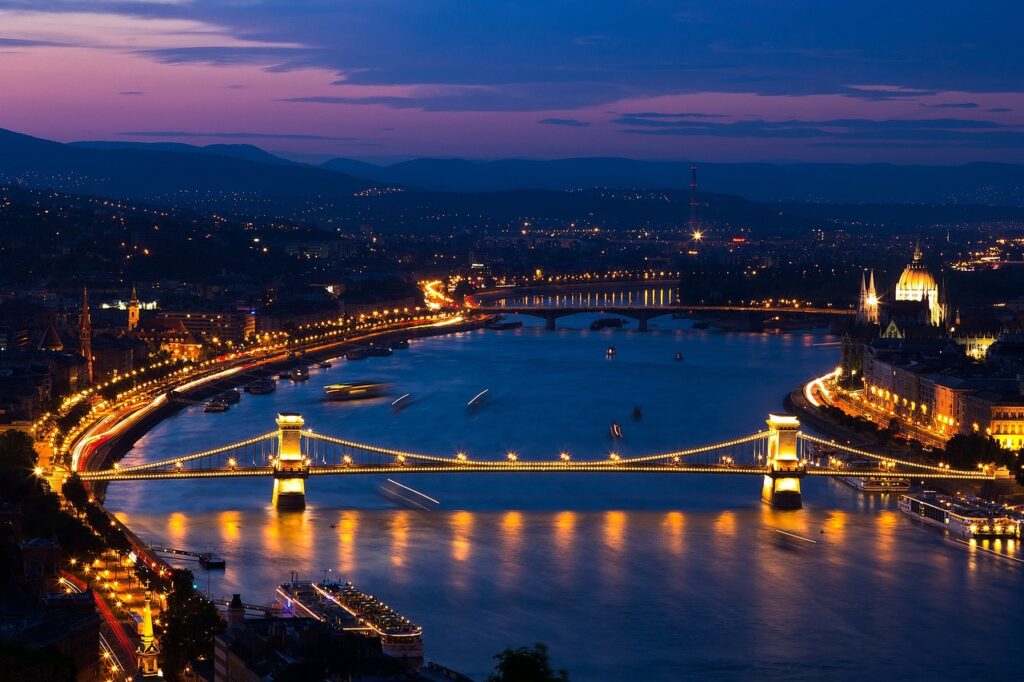






Introduction — Why choose Budapest’s night transport
Budapest transforms after dark: the banks of the Danube glow, thermal baths like Széchenyi and Gellért stay open for night owls, and the ruin bars in District VII draw an international crowd. For visitors and locals alike, knowing your night transport options (buses, trams and taxis) is key to enjoying the city with peace of mind. This article is a practical, comprehensive guide with exact addresses, typical schedules, prices shown in euros, safety tips and local recommendations for getting around Budapest at night.
Budapest’s night public transport is set up to connect major hubs: the train stations (Keleti, Nyugati, Déli), central squares (Deák Ferenc tér, Kálvin tér, Blaha Lujza tér) and the city’s nightlife neighborhoods (District VII/Józsefváros and District V/Belváros). While the metro usually closes at night, a network of night buses replaces the lines and provides reasonable connections. At the same time, some tram routes keep running late along main corridors, and official taxi companies (e.g. Főtaxi) offer a more comfortable—and sometimes faster—door-to-door option, especially for groups or luggage-heavy trips.
This guide gives you concrete info: where to find stops, exact addresses of major hubs, night bus routes, price ranges in euros (approximate conversion from Hungarian forint), typical timetables, and practical tips—how to buy a night ticket, how to spot an official taxi, and how to avoid common mistakes (wrong stop, invalid ticket, bad distance estimates). Timetables and fares are indicative and based on typical practice; always check official apps (BKK Futár) or operator sites before you travel, especially during holidays or big events.
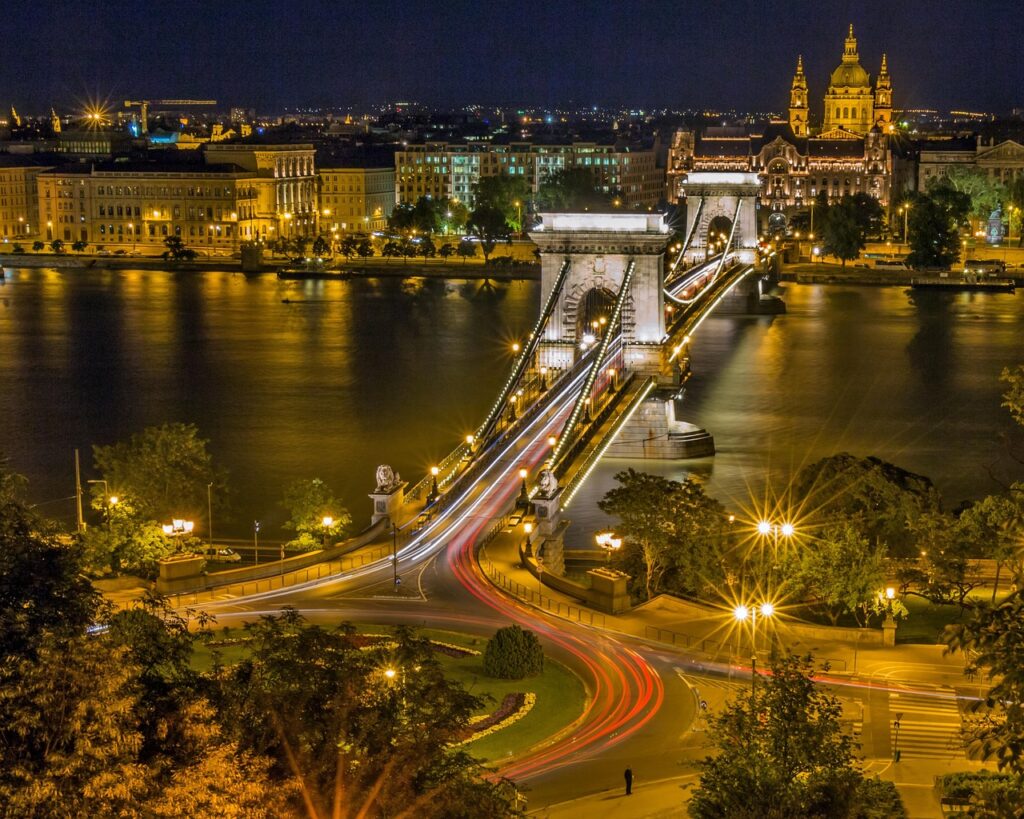
1) Night buses: routes, timetables, main stops and fares
Budapest’s night bus system is designed to replace the closed metro lines (M1, M2, M3, M4) and to connect central neighborhoods with the train stations. Night buses usually have numbers starting with 9xx (for example 900, 914, 950 depending on the route); they operate mostly between about 00:30 and 04:30, with frequencies typically ranging from 20 to 60 minutes depending on the line and the night of the week (Friday/Saturday nights are the busiest).
Main stops served and addresses:
- Deák Ferenc tér — Deák Ferenc tér 1, 1052 Budapest — the central hub for night connections in all directions.
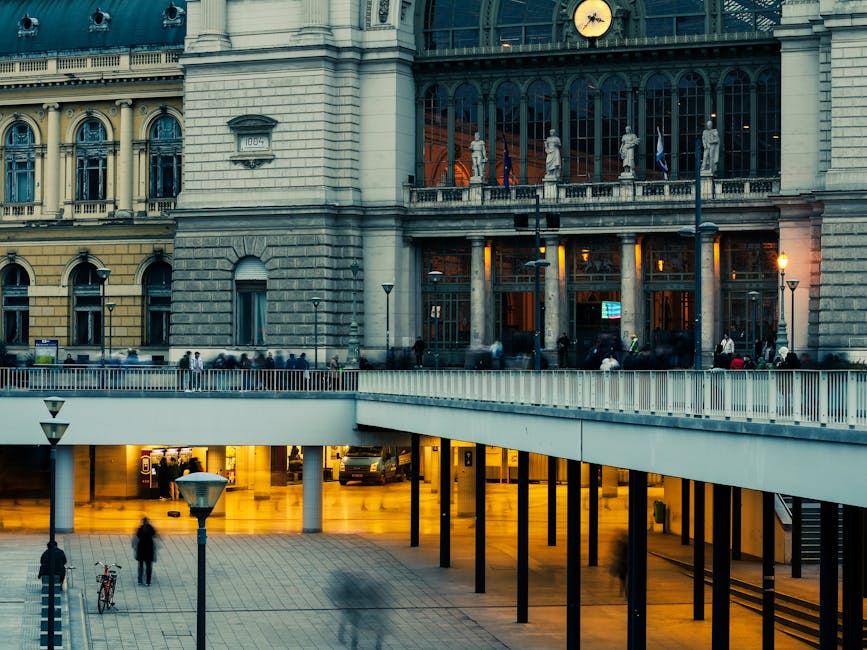
- Keleti pályaudvar (East Station) — Rákóczi út 1–3, 1074 Budapest — connection point for intercity trains and some night buses.
- Nyugati pályaudvar (West Station) — Nyugati tér 6–8, 1067 Budapest — main stop for lines heading northwest and daytime tram/metro links.
- Blaha Lujza tér — Blaha Lujza tér 9, 1085 Budapest — access to bars and theaters in District VII.
Typical hours and frequencies:
- Approximate start: 00:30 (after the metro closes)
- Approximate end: 04:30–05:00 (before the metro resumes)
- Frequency: 20–40 minutes for main lines, up to 60 minutes for peripheral lines.
Fares and tickets (prices shown in euros, approximate conversion):
- Single ticket: around 350 HUF ≈ €0.95 — valid for a single journey with limited transfers (check exact validity on your ticket).
- 24-hour pass: around 1,650 HUF ≈ €4.50 — valid for 24 hours on all public transport (regional trains excluded), handy if you plan multiple trips.
- 72-hour pass: around 4,150 HUF ≈ €11.40 — good for short stays with lots of day-and-night travel.
Buying tickets: you can buy tickets at ticket machines in major stations (some accept cards), via the official BKK FUTÁR app (Apple/Android), or at BKK sales points. On board a bus, validate your ticket in the yellow/blue validator. Inspections are regular even at night: traveling without a valid ticket can result in a fine.
Local tips:
- Keep your receipt/QR code until you leave — an inspector may ask to see it at any time.
- If you leave a bar late, check the nearest night-bus route (Deák Ferenc tér is the safest place to change lines).
- If you’re traveling with luggage or in a group, opt for an official taxi for extra comfort.
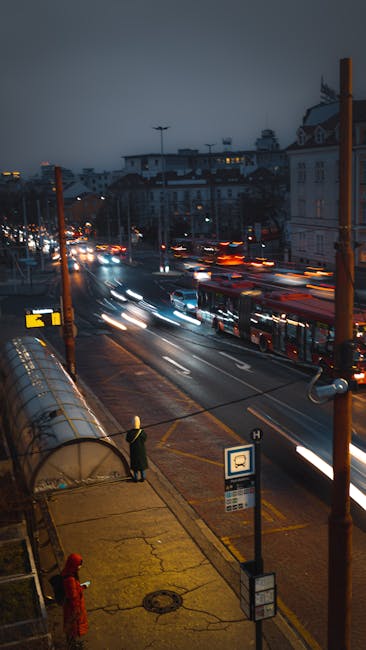
2) Night trams and late services: lines, useful sections and what to expect
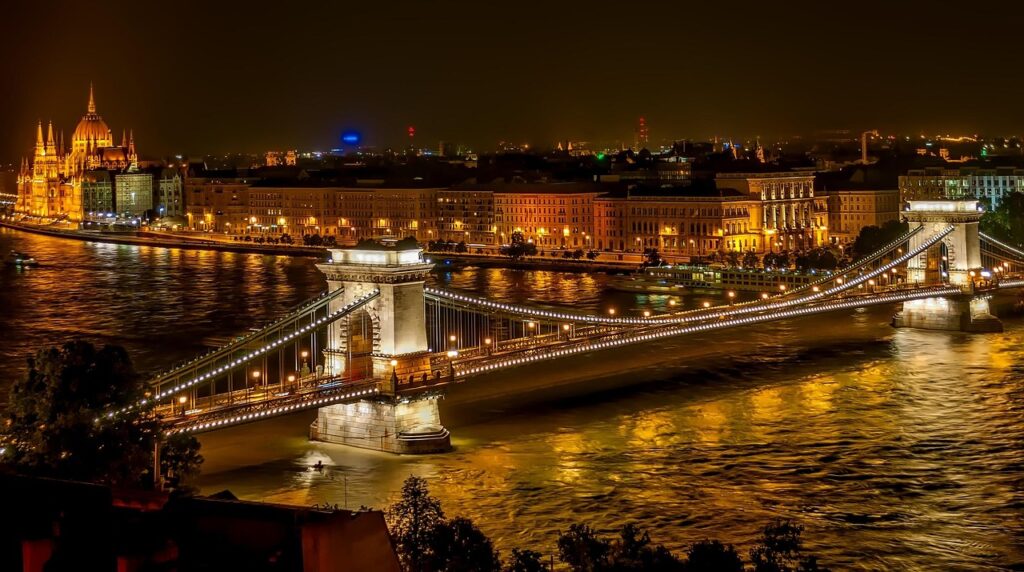
Unlike some metro lines, several tram sections remain available late into the evening, especially on major routes along the Danube and through the city center. Trams provide an excellent visual experience at night: illuminated bridges, historic buildings and tree-lined quays. The most useful tram lines for night owls typically include tram 4/6 (which runs frequently during the day and sometimes late), and trams running along the Pest riverfront (e.g. routes near Margit híd or Széchenyi lánchíd).
Notable stops and addresses:
- Széchenyi Chain Bridge / Széchenyi Lánchíd tram nearby — Clark Ádám tér / Szent István tér — access to Várnegyed (Castle Hill).
- Margit híd — Margit híd, 1027 Budapest — entrance to Margaret Island, pleasant for a nighttime stroll.
- Kossuth Lajos tér (Parliament) — Kossuth Lajos tér, 1055 Budapest — stop near the Hungarian Parliament, an impressive nighttime spectacle.
Hours and frequency:
Schedules vary by day. On weekdays, trams may run until 23:00–00:00 on most lines; on weekends, some lines maintain late services, sometimes at reduced frequency (every 20–30 minutes). In practice, it’s common to take a late tram for part of a journey and then switch to a night bus to reach areas not covered by trams.
Fares:
The same fares as buses apply to trams: single ticket ≈ €0.95; 24/72h passes available. Remember to validate on board or at station machines. Trams are great for night views but can get crowded on weekends, so keep your belongings in front of you and avoid sitting alone in isolated seats late at night.
Practical tips:
- If you want a great view of the Chain Bridge (Széchenyi Lánchíd) at night, get off at Széchenyi István tér for a panoramic view of the illuminated Parliament.
- Trams offer superb night-photo opportunities: sit on the Danube side for the best shots.
- To get from Pest to Buda after midnight, check whether there’s a direct night bus — it can sometimes be quicker than taking a tram then a bus.
3) Reliable taxis at night: official companies, indicative fares and traffic
Taking a taxi can be the safest and most direct option at night, especially if you have luggage, a group, or you’re out very late. In Budapest there are official, city-recognized companies (e.g. Főtaxi) and modern booking apps that offer transparent fares and trackable rides. Here’s what you need to know to spot an official cab and estimate the cost of a night ride.
Companies and contact points:
- Főtaxi — book by phone at +36 1 222 2 222 or via the Főtaxi app. Főtaxi is one of the long-standing operators, easily recognized by its yellow logo and marked vehicles.
- Bolt / Uber alternatives — Bolt operates in Budapest and lets you order a vehicle via the app (surge pricing may apply during high demand).
- Main taxi stands — Stations: Keleti pályaudvar (Rákóczi út 1–3, 1074 Budapest), Nyugati pályaudvar (Nyugati tér 6–8, 1067 Budapest), Déli pályaudvar (near Márvány utca / Krisztina körút).
Indicative fares (approx. and converted to euros):
- Flag fall (initial charge): around 700–900 HUF ≈ €1.90–€2.40.
- Price per kilometer: around 300–400 HUF/km ≈ €0.80–€1.05/km.
- Waiting/time-based charge: applicable if the trip is slow due to traffic; usually billed in HUF according to the meter.
- Example trip: Liszt Ferenc Airport to the city center (Deák Ferenc tér): 7,000–10,000 HUF ≈ €19–€27 depending on traffic and luggage.
Tips to avoid scams:
- Prefer booking through an app or calling an official company rather than hailing an unmarked cab on the street.
- Make sure the meter is turned on at the start; ask for a price estimate via the app if unsure.
- Official taxis display a license/ID inside; note this number if you lose something or need to report an issue.
Comfort and safety:
Taxis provide door-to-door service, air conditioning, and often card payment (check before you get in). For very late rides (after 03:00), expect a slightly higher fare due to less traffic and occasional surcharges for airport trips or bulky luggage. For a small group on a reasonable budget, a taxi can be cheaper than several night-bus tickets, especially when you’re tired or in a hurry.
4) Safety, local tips and special situations (events, holidays, service resumptions)
Night safety in Budapest is generally good, but like any big city a few precautions make sense. Central areas are well lit and monitored, while some outskirts are less busy. Here are concrete recommendations to navigate the night stress-free.
Safety tips:
- Prefer traveling in a group or use an official taxi after midnight if you’re alone and carrying luggage.
- Keep valuables secure: phone, wallet and passport (or a photocopy) — wear your bag in front on crowded public transport.
- Avoid displaying large amounts of cash in public; pay by card where possible in taxis and bars.
Special situations:
- Special events (New Year’s Eve, national holidays, concerts): expect altered timetables and extra services on some lines; night buses may run modified routes. Check the BKK site and station notices.
- Festivals and big nights out: allow an extra 30–60 minutes to get a taxi after a show; apps may show surge pricing.
- Works and interruptions: the city sometimes schedules replacement buses for metro or tram works on weekends — check notices at Deák Ferenc tér or station electronic boards.
Final local tips:
- Download the BKK FUTÁR mobile app to get real-time updates on timetables, delays and alternative routes.
- Keep some coins and a printed ticket or a saved copy on your phone to avoid surprises during inspections.
- If you arrive or depart from the airport (Budapest Liszt Ferenc International Airport — address: Ferihegyi repülőtér, 1185 Budapest), prefer official taxis or the daytime 100E express service; at night, a taxi is usually the simplest option if trains or buses aren’t running.
Conclusion — Plan your night trips to make the most of Budapest
Budapest strikes a good balance between a lively nightlife and a transport network that reassures visitors: structured night buses, trams that offer memorable night views, and official taxis that are practical and often cost-effective for direct trips. This guide gave you the essentials to get your bearings — key addresses like Keleti pályaudvar (Rákóczi út 1–3, 1074 Budapest) or Deák Ferenc tér 1, price ranges shown in euros, and practical tips to avoid common mistakes.
Before each night trip, take five minutes to check timetables via the BKK FUTÁR app, and carry a means of electronic payment plus some cash. If you plan to go out several nights, a 24h or 72h pass can save you time and money — but for very late trips or airport runs, a taxi remains the safer, more direct choice. Above all, soak up the atmosphere: a stroll along the Danube, a lit-up tram sliding past the Parliament, or a night bus bringing you back from a ruin bar are all part of Budapest’s nocturnal charm.
Safe travels and enjoy Budapest after dark — travel safely, respect local rules and savor every light, bridge and alley the city has to offer.